
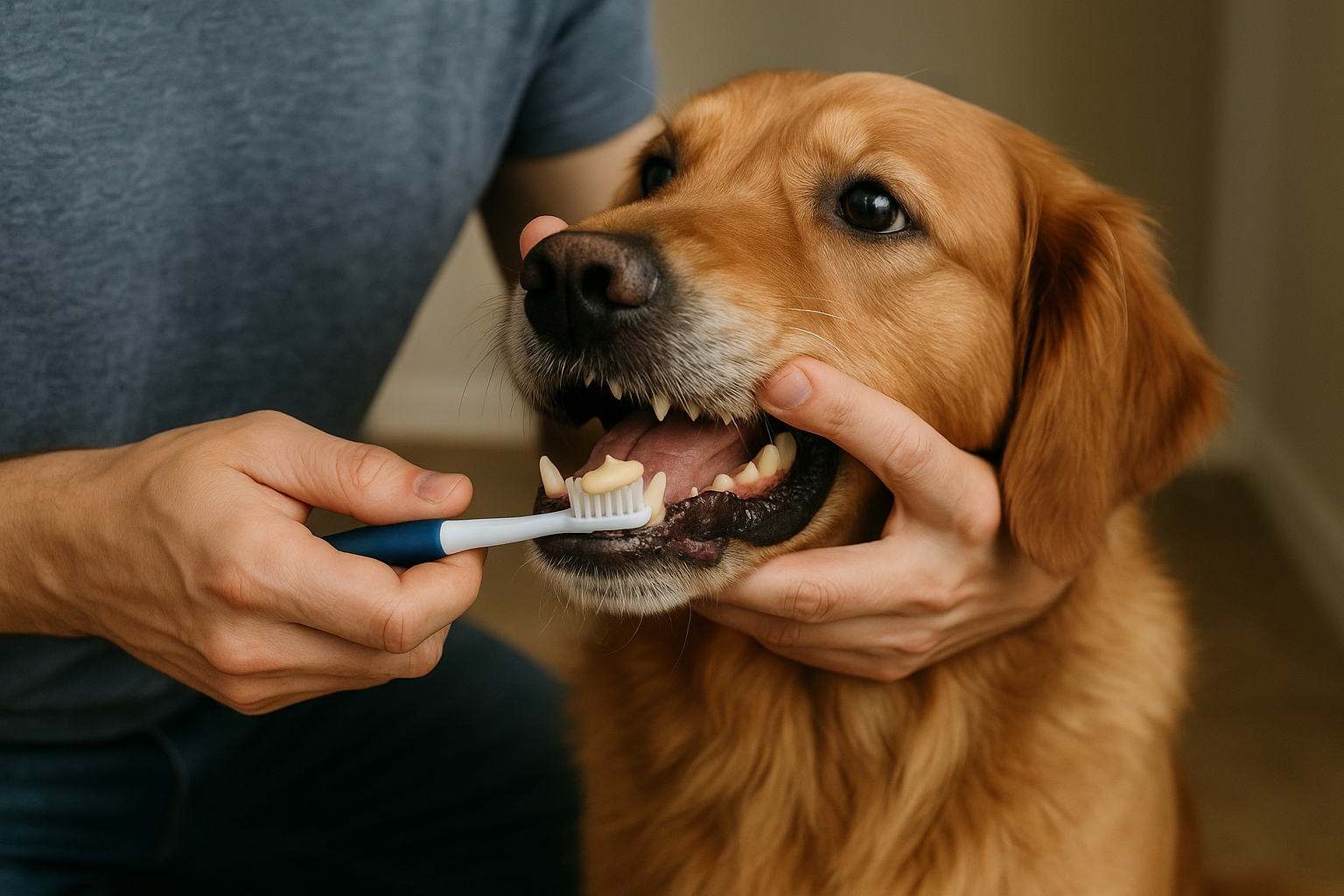
Dental care is a crucial but often overlooked part of a dog’s overall health. Just like humans, dogs can develop dental issues such as tartar buildup, gingivitis, and bad breath. Left untreated, these problems can lead to pain, tooth loss, and even systemic infections that affect the heart, liver, and kidneys. In this article, we’ll walk you through how to brush your dog’s teeth properly, why it’s important, and how to make the experience stress-free for both you and your pet.
Why Brushing Your Dog’s Teeth Matters
Regular tooth brushing is the most effective way to remove plaque and prevent tartar buildup in dogs. Plaque is a soft, sticky film that contains bacteria. If not removed, it hardens into tartar, which can irritate the gums and lead to periodontal disease.
According to veterinary dental specialists, over 80% of dogs over the age of three have some form of dental disease. Signs of dental problems include:
- Bad breath
- Red or swollen gums
- Yellow or brown tartar on teeth
- Difficulty eating
- Pawing at the mouth
By brushing your dog’s teeth regularly, you’re not only preventing discomfort but also supporting their overall health and longevity.
How Often Should You Brush Your Dog’s Teeth?
Ideally, you should brush your dog’s teeth daily. However, even brushing a few times a week can make a significant difference. The more often you brush, the more effective it will be in controlling plaque and tartar buildup.
Consistency is key, so find a routine that works for both you and your dog.
What You’ll Need
Before you begin, gather the necessary supplies:
- Dog toothbrush: These are specially designed with softer bristles and angled heads to reach all areas of your dog’s mouth.
- Dog toothpaste: Never use human toothpaste, as it contains ingredients like fluoride and xylitol that are toxic to dogs. Dog toothpaste comes in flavors like poultry, beef, and peanut butter that most dogs find appealing.
- Gauze or finger brush (optional): For dogs new to brushing, a piece of gauze wrapped around your finger can be a gentle alternative to a brush.
How to Brush Your Dog’s Teeth: Step-by-Step Guide
Step 1: Get Your Dog Comfortable
Start by getting your dog used to having their mouth handled. Gently lift their lips and touch their teeth and gums with your finger. Use a calm, soothing voice and reward them with praise or treats.
This step might take a few days to a week, depending on your dog’s comfort level.
Step 2: Introduce the Toothpaste
Let your dog lick a small amount of dog toothpaste from your finger. This helps them get used to the taste and texture. Most dog toothpastes are designed to be palatable, which makes the process easier.
Step 3: Use the Toothbrush
Apply a small amount of toothpaste to the toothbrush. Hold the brush at a 45-degree angle to your dog’s teeth and use gentle circular motions. Focus on the outside surfaces of the teeth, as that’s where plaque tends to accumulate most.
Start with the front teeth and gradually work your way to the back teeth. Brush for about 30 seconds on each side of the mouth if your dog tolerates it.
Step 4: Keep Sessions Short and Positive
Especially in the beginning, keep brushing sessions brief—around 1 to 2 minutes is ideal. Gradually increase the time as your dog becomes more comfortable.
Praise your dog frequently and offer treats or extra playtime as a reward after each session. This helps create a positive association with tooth brushing.
Step 5: Watch for Signs of Discomfort
If your dog shows signs of pain, such as whimpering, pulling away, or bleeding gums, stop brushing and consult your veterinarian. There might be an underlying dental issue that needs professional treatment.
Tips for Success
- Consistency is more important than perfection. Even if you can’t brush every day, aim for several times a week.
- Choose the right time. Pick a calm moment when your dog is relaxed, such as after a walk or play session.
- Start slow. Don’t rush the process; let your dog get used to each step before moving on.
- Be patient. It may take a few weeks for your dog to fully accept tooth brushing.
Additional Dental Care Options
While brushing is the gold standard, there are other ways to support your dog’s dental health:
- Dental chews: Specially designed chews can help reduce plaque and tartar.
- Water additives: These can help freshen breath and reduce bacteria.
- Professional cleanings: Annual dental cleanings by a veterinarian are important to address plaque and tartar that brushing can’t remove.
Final Thoughts
Brushing your dog’s teeth may seem like a daunting task at first, but with patience and practice, it can become a rewarding part of your routine. Regular brushing not only prevents dental disease but also strengthens the bond between you and your dog.
Remember: a healthy mouth means a healthier dog. By investing just a few minutes a day, you’re helping your furry friend live a longer, happier, and pain-free life.